About BAYSM
BAYSM 2026 is the 10th edition of the Bayesian Young Statisticians Meeting: the official conference of j-ISBA, the junior section of the International Society for Bayesian Analysis (ISBA). The meeting is held in person in even-numbered years, typically in conjunction with the ISBA World Meeting, and online in odd-numbered years.
BAYSM is a platform for connection within the Bayesian community.
The conference provides many opportunities for students and early career researchers to meet with established senior researchers and to build their professional networks. Research across the many domains where Bayesian methods are employed is promoted.
BAYSM 2026 will be held in June 26 - 27, 2026 at Chiba University, Chiba, Japan, just prior to the 2026 ISBA world meeting.
All attendees are expected to adhere to the ISBA code of conduct.
Information about previous BAYSM editions can be found here.
Event Starts In:
Venue
Chiba University
Keyaki Kaikan, 3rd floor Reception Hall
Chiba University, Nishi-Chiba Campus
Campus Map: click here
Keyaki Kaikan is located very close to the Main Gate. Although the South Gate is closer for people arriving from JR Nishi-Chiba Station, we recommend entering from the Main Gate, as Keyaki Kaikan is easier to find from there using the campus map.
Chiba University is ideally located in the Tokyo metropolitan area. This encourages collaboration with leading companies and research institutions in this area. In addition to academic activities, students can enjoy many recreational facilities in city areas as well as nature in regional areas.
Getting there
2 min walk from Nishi-Chiba Station (JR) to the South Gate
7 min walk from Midoridai Station (Keisei) to the Main Gate
10 min walk from Tendai Station (Chiba Monorail) to the North Gate
Please visit this link for more information on accessing the campus.
Poster printing
Posters should be in A0 format, portrait orientation. They can be printed close to the venue at Kinko's. To contact them beforehand, you can use the chat (orange button) on their website. Please, allow at least half a day for printing. Order, collection and payment should be arranged on an individual basis.
Keynote Speakers
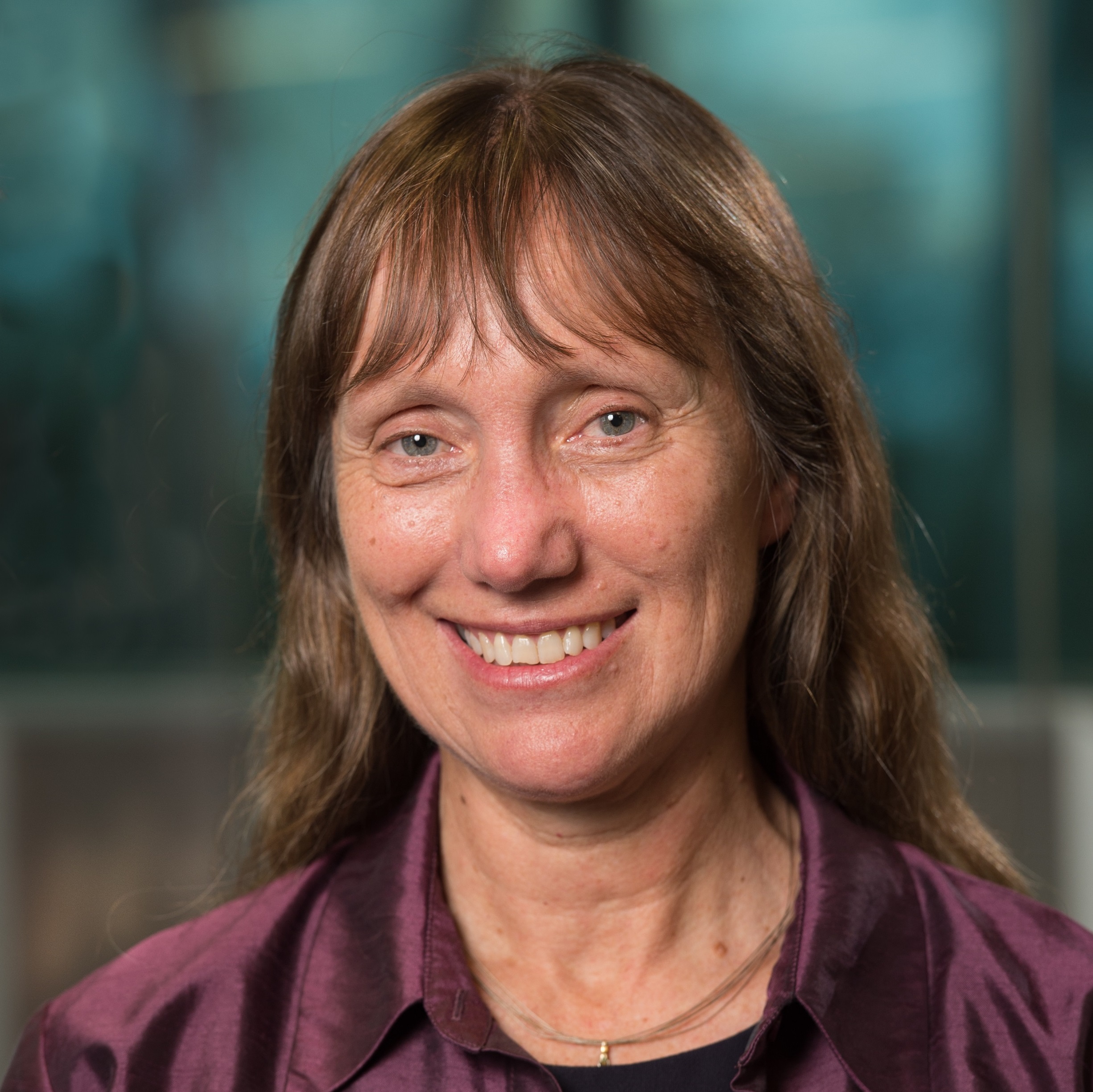
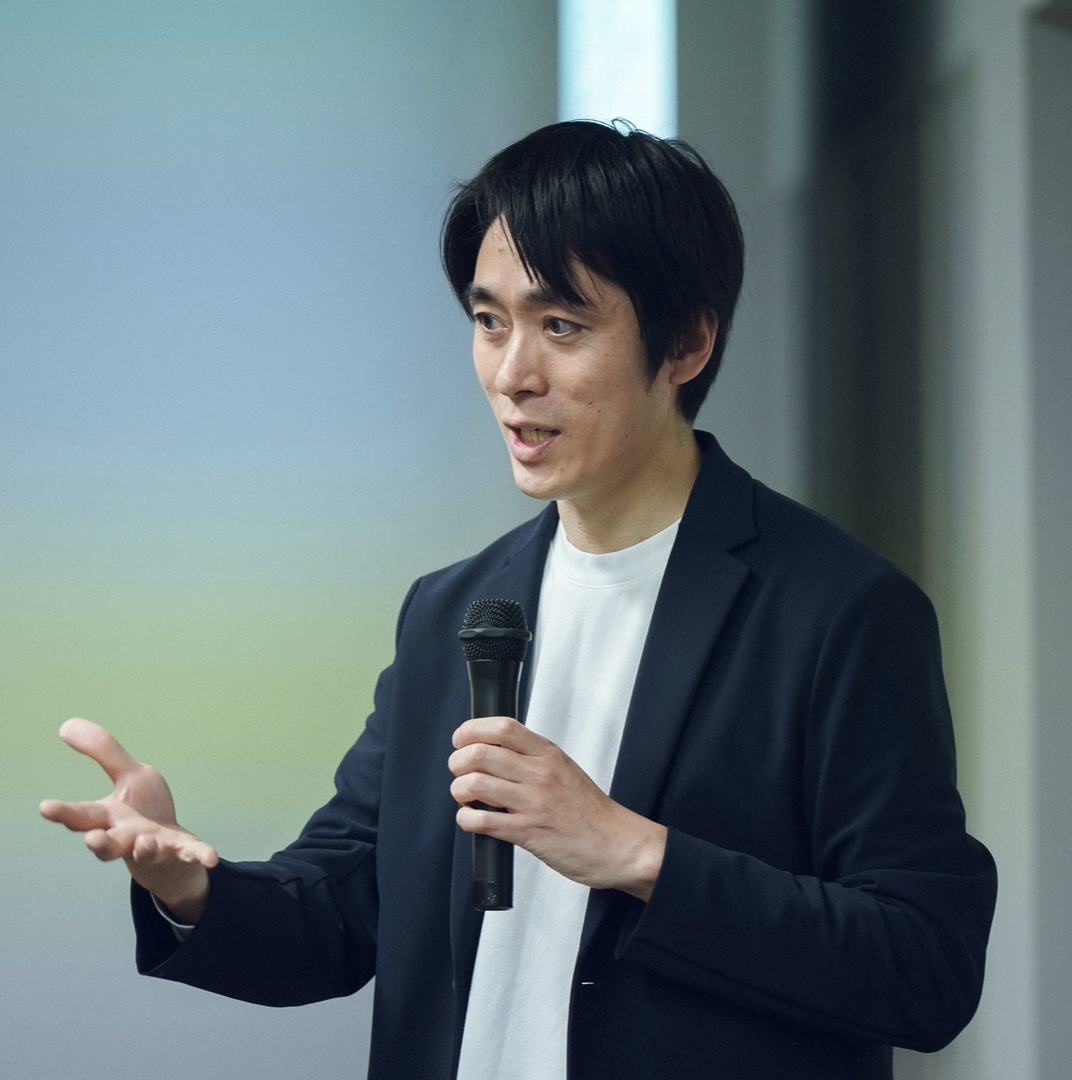
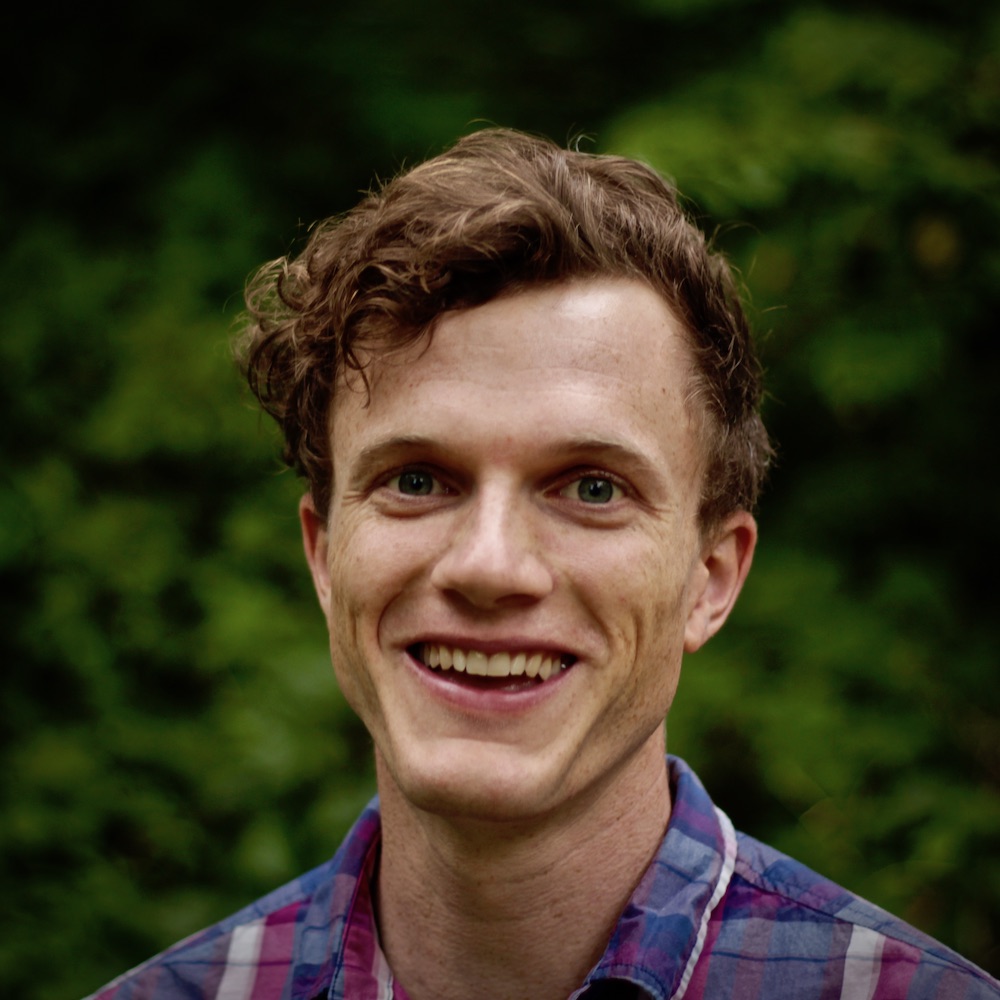
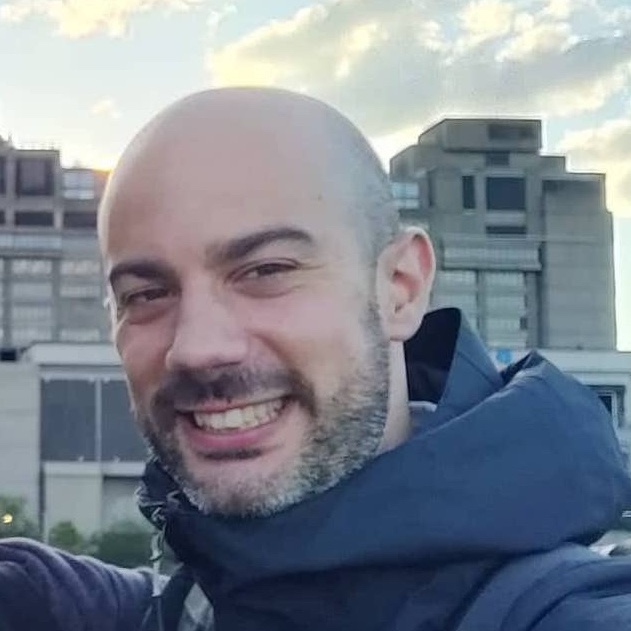
Blackwell-Rosenbluth Award Talks
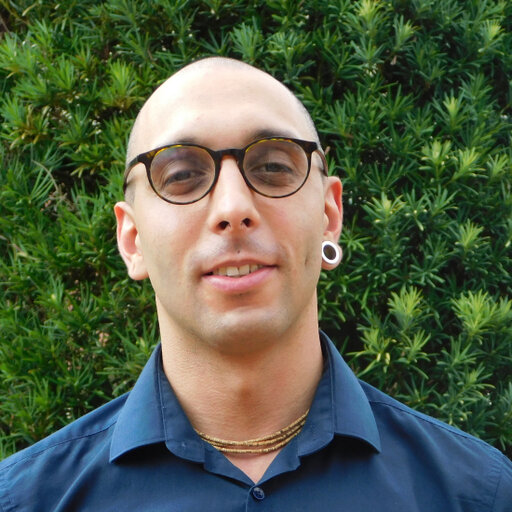
Discussants
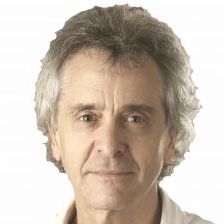 Mike West, Duke University
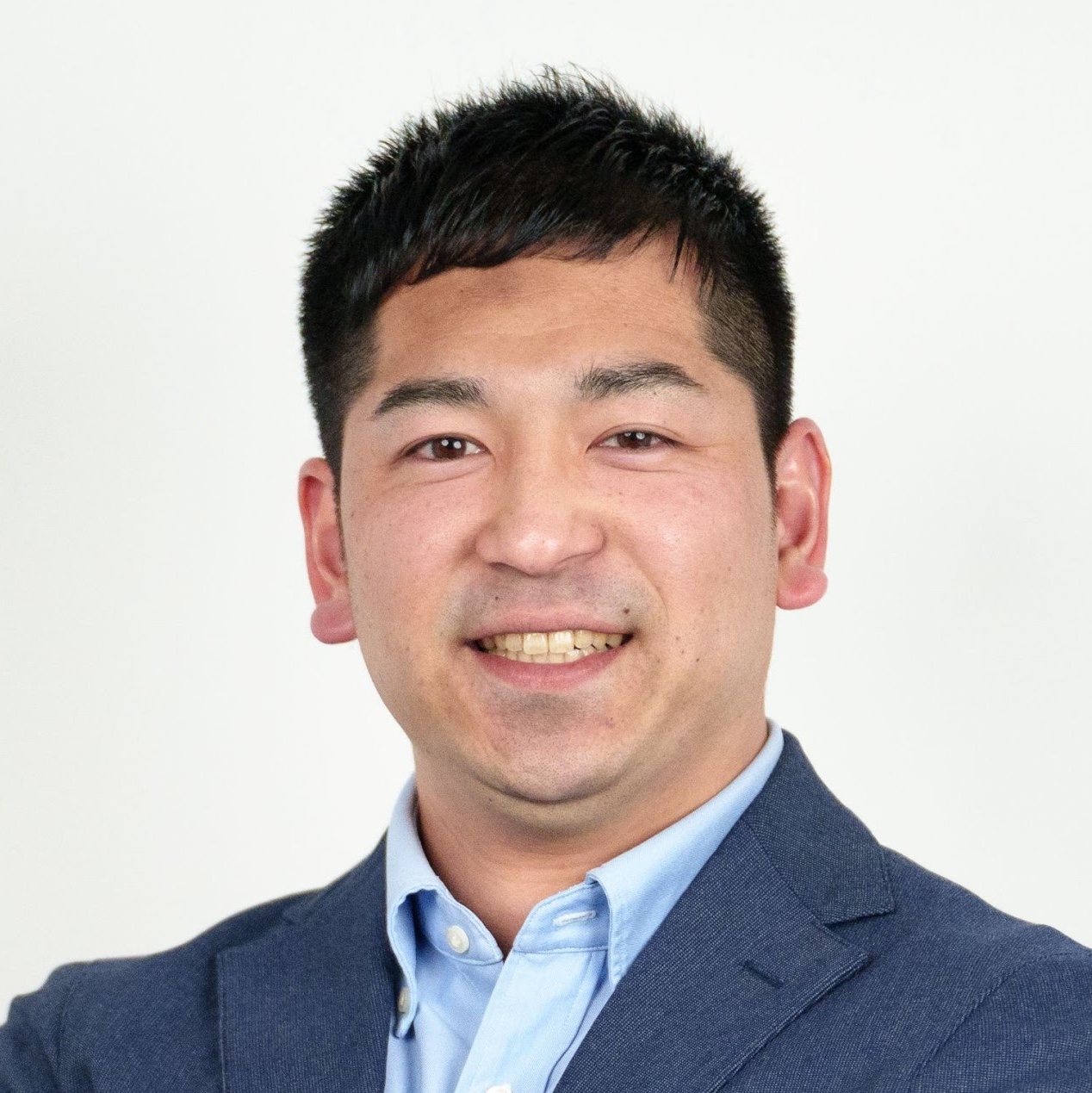 Shonosuke Sugasawa, Keio University
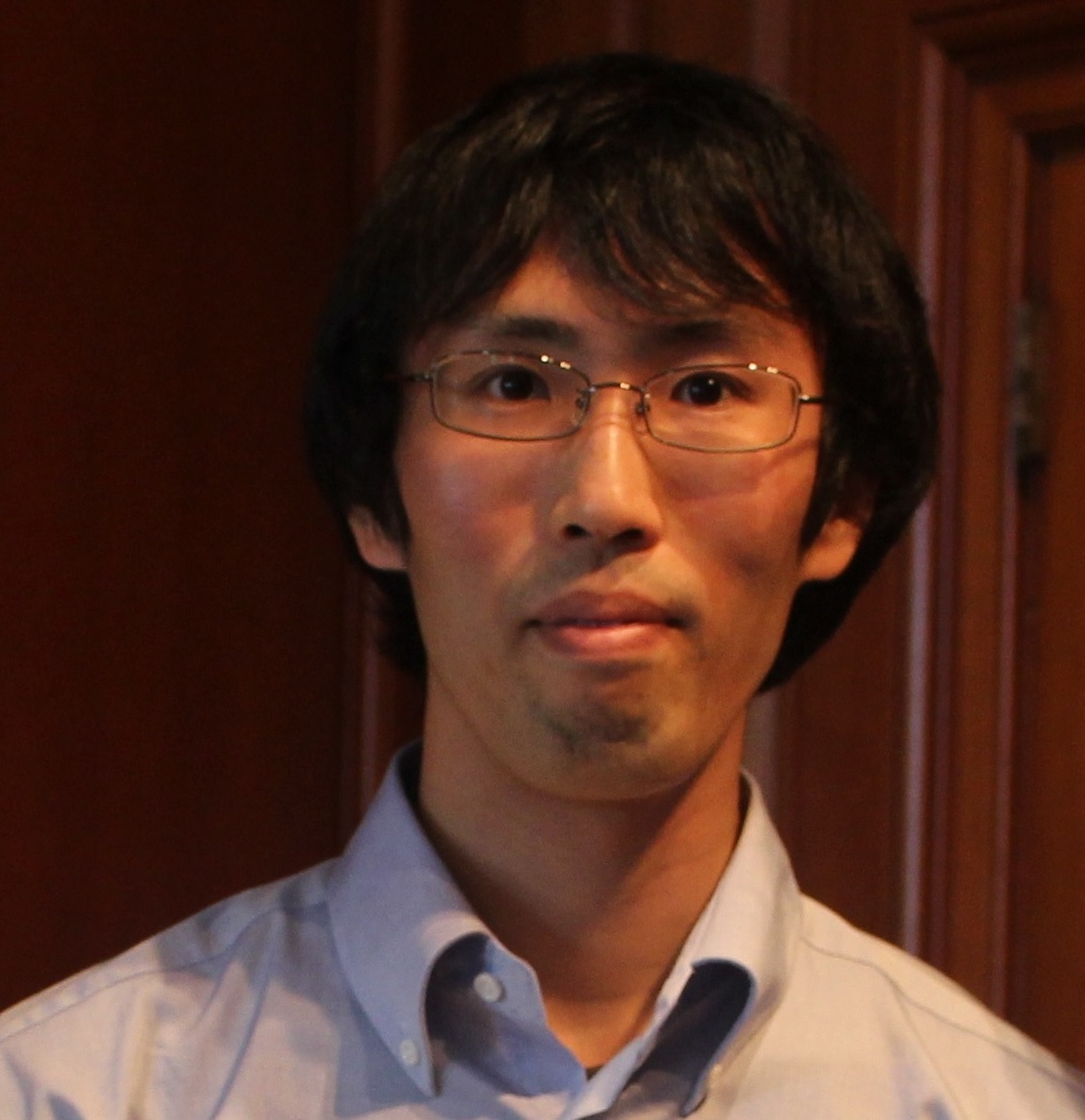 Kaoru Irie, The University of Tokyo
Schedule
9:30 - 10:15
Coffee break
10:45 - 12:15
Bayesian generative models
Predictively Oriented Posteriors
Yann McLatchie, University College London
Bayesian Decision Support Using Complex Computer Models for Uncertain Utility Functions
Jonathan Owen, University of Sheffield
Horseshoe prior for implicit generative models
Shreya Sinha Roy, Warwick University
NeuralSurv: Deep Survival Analysis with Bayesian Uncertainty Quantification
Mélodie Monod, Université Paris Dauphine
Yann McLatchie, University College London
Bayesian Decision Support Using Complex Computer Models for Uncertain Utility Functions
Jonathan Owen, University of Sheffield
Horseshoe prior for implicit generative models
Shreya Sinha Roy, Warwick University
NeuralSurv: Deep Survival Analysis with Bayesian Uncertainty Quantification
Mélodie Monod, Université Paris Dauphine
Lunch break
13:45 - 15:00
Blackwell-Rosenbluth Award 1
Nianqiao Ju, Dartmouth College, Recent Advances in Bayesian Inference from Privatized Data via Data Augmentation
Abstract →
Abstract →
Beniamino Hadj-Amar, University of South Carolina, Frequency Selection in Bayesian Spectral Modeling of Time Series Data with Applications to Wearable Device Measurements
Abstract →
Abstract →
Geoff Pleiss, University of British-Columbia, We Still Don't Understand High Dimensional Bayesian Optimization
Abstract →
Abstract →
Coffee break
15:30 - 17:00
Bayesian methods in Causal Inference and Network Science
Transporting Principal Causal Effects Across Strata: A Bayesian Causal Inference Approach
Veronica Ballerini, Harvard University
Bayesian latent factor models with tensor decomposed time-varying loadings for causal inference with unobserved confounding
Luke Hardcastle, University of Cambridge
Hyperbolic Latent Space Models for Network Embedding: Model Specification and Bayesian Inference
Yiwei Gong, University of Texas at Austin
Multiscale network modeling of migration flows in Austria
Martina Contisciani, Central European University
Veronica Ballerini, Harvard University
Bayesian latent factor models with tensor decomposed time-varying loadings for causal inference with unobserved confounding
Luke Hardcastle, University of Cambridge
Hyperbolic Latent Space Models for Network Embedding: Model Specification and Bayesian Inference
Yiwei Gong, University of Texas at Austin
Multiscale network modeling of migration flows in Austria
Martina Contisciani, Central European University
Poster session 1 (click to display)
- 1.Nicola Bariletto, University of Texas at AustinConformalized Bayesian Inference, with Applications to Random Partition Models
- 2.Laura Bazahica, Lappeenranta-Lahti University of TechnologyGradient-Informed Grid Selection for Intractable Likelihoods
- 3.Sayan Bhowmik, Indian Institute of Technology KanpurA CAR-copula framework for sub-asymptotic modeling of areal rainfall extremes
- 4.Imke Botha, University of MelbourneBayesian inference of a spatio-temporal nearest neighbor Gaussian process model for pooled genetic data
- 5.Ylenia Francesca Buttigliero, Università di TorinoBayesian Bootstrap beyond observation times
- 6.Lucas Da Rocha Schwengber, UC BerkeleyPosterior local sensitivity and Otto’s calculus
- 7.B. Alfons Edmar, Utrecht UniversityBayesian evidence synthesis under heterogenious effects
- 8.Tahir Ekin, Texas State UniversityAdversarial Risk and Dynamic Defense Decisions in Sequential Bayesian Count Models
- 9.Marta Ferrari, University of PaduaA spatial clustering-based modeling framework for the detection and characterization of diffuse astronomical source
- 10.Bernardo Flores, University of Texas at AustinBeyond Newton’s Recursion: A Gradient Flow Perspective on Nonparametric Mixture Estimation
- 11.Lucia Gallucci, Sapienza Università di RomaHierarchical Bayesian Nonparametrics for Spatial Underreporting
- 12.Nevena Gligic, The University of Texas at AustinDensity-Informed Pseudo-counts for Calibrated Evidential Deep Learning
- 13.Sebastiano Grazzi, Bocconi UniversityParallel computations for Metropolis Markov chains with Picard maps
- 14.Marc Heinle, University of TwenteBayesian difference-in-differences under overdispersed counts and few clusters: protocol for a practice-level mental health intervention
- 15.Weitao Hu, National University of SingaporeBayesian Fusion Learning for Subgroup Analysis
- 16.Yongchao Huang, University of AberdeenSampling via Gaussian Mixture Approximations
- 17.Jie Jian, The University of ChicagoBayesian Poisson-Randomized Gamma Tensor Factorization with Application to International Trade Flows
- 18.Hwanwoo Kim, Duke UniversityBOMM: Sample-efficient black-box optimization via marginal means
- 19.James Lederman, University of ChicagoConditionally Conjugate Models of Bounded Support Data with Negative Binomially Randomized Beta Likelihoods
- 20.Larissa Lemos, FGV - Fundação Getulio VargasTractable Riemannian Laplace Approximations
- 21.Ruitao Lin, The University of Texas MD Anderson Cancer CenterBayesian Integrated Learning of Longitudinal Dose-Response Relationships via Decentralized Clinical Trials
- 22.Wenqing Liu, Università della Svizzera italianaFlexible and Scalable Bayesian Modelling Of Spatio-Temporal Hawkes Processes
- 23.Cash Hao Looi, Monash UniversityA Skew-Normal Multinomial Probit Model
- 24.Antoine Luciano, University of OxfordBayesian Adversarial Privacy
- 25.Luigi Malgieri, Duke UniversityMultiview Pólya Urn processes
- 26.Paolo Manildo, University of PadovaScalable computations for Latent Dirichlet Allocation through informed non-reversible MCMC schemes
- 27.Isaías Bañales, Kyoto University and UNAMEstimating inhomogeneous spatio-temporal background intensity functions using graphical Dirichlet process
- 28.Mohd Rashid Khan, University of PadovaTargeting What Matters in Pediatric Trials: Bayesian Basket and Umbrella Trials for Heterogeneous Airway Disease
Welcome reception (at University Food Court, located just next to Keyaki Kaikan)
9:00 - 10:30
Advances in Bayesian computation and modeling
Spectral gap of Metropolis-within-Gibbs under log-concavity
Cecilia Secchi, Bocconi University
Bayesian Noise Contrastive Estimation for Unnormalized Models
Naruki Sonobe, Keio University
Group-Coupled Bayesian Online Changepoint Detection
Patrick Woitschig, Duke University
Hierarchical Bayes Approach to Spatial Regression Analysis of Cellular Colocalizations in Cancer Imaging
Jessica Aldous, University of Michigan
Cecilia Secchi, Bocconi University
Bayesian Noise Contrastive Estimation for Unnormalized Models
Naruki Sonobe, Keio University
Group-Coupled Bayesian Online Changepoint Detection
Patrick Woitschig, Duke University
Hierarchical Bayes Approach to Spatial Regression Analysis of Cellular Colocalizations in Cancer Imaging
Jessica Aldous, University of Michigan
Coffee break
11:00 - 12:15
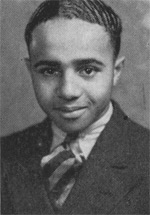
Blackwell-Rosenbluth Award 2
Beatrice Franzolini, University of Milano-Bicocca, Partially Exchangeable Partitions à la de Finetti: Finite and Infinite Characterizations
Abstract →
Abstract →
Francesco Denti, University of Padova, Bayesian Multiresolution Functional Regression and Clustering via Self-Truncating Cumulative Shrinkage Processes
Abstract →
Abstract →
Jun Yang, University of Copenhagen, Sub-Cauchy Sampling: Escaping the Dark Side of the Moon
Abstract →
Abstract →
Lunch break
13:45 - 14:30
Poster session 2 (click to display)
- 1.Cynthia Medeiros, University of StrathclydeA Simulation Study of Topic Model Performance under Varying Corpus Conditions
- 2.Yosuke Mori, Keio UniversityCryptocurrency Volatility Prediction Using Realized Stochastic Volatility Models
- 3.Bao Khanh Nguyen, University of EdinburghBayesian Image Segmentation of Remote Sensing Images
- 4.Anne Cohen, University of MichiganImproved methods to account for complex sampling designs in Bayesian analyses
- 5.Arwen Nugteren, Queensland University of Technology
- 6.Hisaya Okahara, Tokyo University of Science
- 7.Filippo Pagani, University of WarwickApproximate Bayesian Fusion
- 8.Sotirios Pestrivas, Queensland University of TechnologyBayesian Inference in Cycling Aerodynamics: Hierarchical Models and Physics-Informed Decomposition
- 9.Maria Fernanda Pintado, Cunef UniversidadBayesian Markov-Switching Intraday Volatility Transmission
- 10.Federica Zoe Ricci, Swarthmore CollegeA novel biclustering model to discover multiple brain activation patterns underlying the execution of the same task
- 11.Luciano Rota, Milano Bicocca UniversityInformed Ordered Random Partitions in Gaussian Graphical Models
- 12.Gian Mario Sangiovanni, Sapienza UniverityA Bayesian Framework for Single-Sample Population Size Estimation Using Kinship Data
- 13.Taole Sha, The University of Hong KongSmoothing the posterior bootstrap with greedy empirical Bayesian trees
- 14.Wanyue Sun, University of Hong KongPredictive Resampling for High-dimensional Regression
- 15.Edric Tam, Stanford UniversityPrediction Powered Posteriors
- 16.Jia Le Tan, University of WarwickApproximate Bayesian Inference for Fisheries and Ecological Dynamics
- 17.Giovanni Toto, University of Texas at AustinCondition matrix completion for polypharmacy medication information
- 18.Sylvia Vincent, Duke UniversitySelective inference For Clustering: An Empirical Bayes Approach
- 19.Zhihao Wang, University of CopenhagenCouplings of stereographic MCMC algorithms
- 20.Daniel Waxman, Basis Research InstituteDynestyx: A Probabilistic Programming Language for Dynamical Systems
- 21.Shelly Xie, Monash UniversityExponentially tilted empirical likelihood sensitivity for Bayesian moment condition models
- 22.zi yang, the university of Hong KongMulti-View Oriented GPLVM: Expressiveness and Efficiency
- 23.Qiufei Yao, Bocconi UniversityTruncated Inverse-Lévy Representation of the Beta Process
- 24.Xiang Ye, King Abdullah University of Science and TechnologyA Bayesian Inference Framework for Models with Circular Components
- 25.Yiu Yin Yung, University of Hong KongMoment Martingale Posteriors for Semiparametric Predictive Bayes
- 26.Lorenzo Zuccato, University of OsloBayesian Nonparametric Mallows Model for Clustering Preference Data
- 27.Benjamin K. Dahl, Duke UniversityInterpretable nonnegative matrix factorization for regression
- 28.Vivek Singh, Duke UniversityBayesian Multiplicative Errors-in-Variables Modeling for Hyperspectral Unmixing
Closing remarks
Abstract submission (now closed)
We invite contributions on various topics related to Bayesian theory, methods, and applications. Fill in this form to submit your contribution.
Please submit an extended abstract of your contribution in PDF format. To ensure full consideration of your submission, please adhere to a limit of 700 to 1,000 words.
Abstract submission open: November 7th 2025
Submission deadline: January 30th 2026
Registration
Click the "Register" button below and complete the form.
If you wish to apply the j-ISBA member discount, you must first visit bayesian.org and log in (the login button is in the top right corner of the homepage). After logging in, return to the BAYSM2026 website and click the "Register" button below. Please ensure that the "Primary Email Address" field in the registration form is correct, as this is where you will receive both the payment receipt.
Registration will open: Monday, March 23 2026
ISBA and j-ISBA will be able to provide partial support for the conference registration fee of BAYSM 2026 via Travel Awards. Please fill out this form to apply: Application Form
Regular
200 USD
Early bird: 200 USD (May 30, 2026)
Late: 300 USD (after May 30, 2026)
j-ISBA members
100 USD
Early bird: 100 USD (May 30, 2026)
Late: 200 USD (after May 30, 2026) How to become a j-ISBA member
To become a j-ISBA member, you must first be an ISBA member. If you are not an ISBA member, you can enroll in both ISBA and j-ISBA here. Note that ISBA membership fees are reduced for early career researchers who have graduated from a degree program in the last 5 years.
If you are already an ISBA member but not yet a j-ISBA member, you can enroll in j-ISBA directly here.
Fee exempted
0 USD
People who reside in and work in countries with a per capita GNI not exceeding $6,000 per person are exempt from the conference registration fee. Please reach out to jisba.section@gmail.com or baysm2026@gmail.com for the fee-exemption code.
Contacts
For any questions, please write to baysm2026@gmail.com .
j-ISBA website: https://j-isba.github.io
j-ISBA LinkedIn: https://www.linkedin.com/company/j-isba
j-ISBA website: https://j-isba.github.io
j-ISBA LinkedIn: https://www.linkedin.com/company/j-isba
Committees
Scientific committee
Filippo Ascolani, Duke University
Nicolas Bianco, Karlsruhe Institute of Technology
Jordan Bryan, University of Virginia
Francesco Denti, University of Padua
Beatrice Franzolini, University of Milan Bicocca
Edwin Fong, University of Hong Kong
Francesco Gaffi, University of Bergamo
Matteo Giordano, University of Turin
Clara Grazian, University of Sydney
Beniamino Hadj-Amar, University of South Carolina
Nianqiao Ju, Darthmouth College
Kazuhiko Kakamu, Nagoya City University
Yuki Kawakubo, Chiba University
Emma Landry, University of California Los Angeles
Francesca Panero, Sapienza University
Geoff Pleiss, University of British Columbia
Deborah Sulem, University of Italian Switzerland
Makoto Takahashi, Hosei University
Jun Yang, University of Copenhagen
Alessandro Zito, Harvard University
Organizing committee
Filippo Ascolani, Duke University
Jordan Bryan, University of Virginia
Francesco Gaffi, University of Bergamo
Matteo Giordano, University of Turin
Kazuhiko Kakamu, Nagoya City University
Yuki Kawakubo, Chiba University
Francesca Panero, Sapienza University
Makoto Takahashi, Hosei University
Alessandro Zito, Harvard University